101 GUIDE: How to Select the Best Leak Testing Method for My Product
 THE IMPORTANCE OF CHOOSING THE RIGHT TEST METHOD FOR THE RIGHT APPLICATION

Leak testing and flow measurement are essential steps in ensuring the quality, reliability, and safety of manufactured products. Depending on the part’s size, internal volume, and sensitivity level, different testing methods can be used to detect and quantify leaks.
At ATEQ Canada, we help manufacturers select the most efficient leak testing method for their process by balancing four key criteria: required speed, sensitivity needs, cost per test, and production volume.
1- GET TO KNOW THE LEAK AND FLOW TESTING METHODS
Each technique has its own advantages depending on your product type and production environment. Below are the most common methods used across industries:
- Pressure Decay Testing
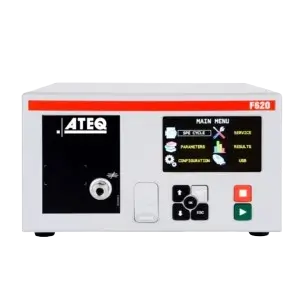 One of the most widely used methods, pressure decay measures the loss of air pressure over time within a sealed test part. It’s simple, reliable, and cost-effective. Ideal for small or medium-volume parts where speed and precision are both required.
The ATEQ F620 is a leading example of this technology, delivering fast and stable pressure decay testing for industrial applications.
- Laminar & Mass Flow Testing
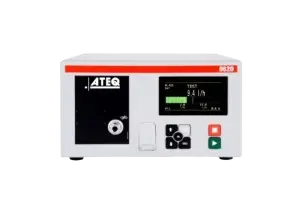 These methods measure the flow of air through a leak or restriction using laminar or mass flow principles. Explore ATEQ’s complete range of flow testing solutions to find the best fit for your application.
- Tracer Gas Testing
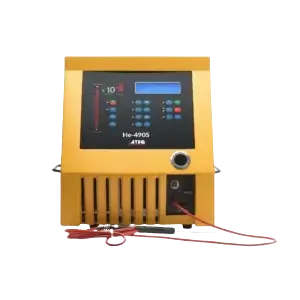 When extreme sensitivity is required, helium or hydrogen tracer gas testing can detect even the smallest leaks. This method is commonly used in industries such as automotive, EV batteries, medical devices, and HVAC.
The ATEQ HX490S Dual Gas and HE490S Helium Leak Detectors deliver high-speed, ultra-sensitive detection for precise and reliable tracer gas testing across all applications.
- Electrical Testing
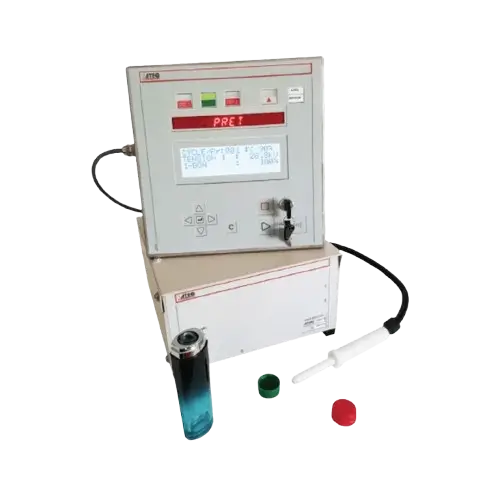 Electrical safety and insulation integrity are critical in modern manufacturing, especially for EV battery modules and power electronics. Electrical testers check insulation resistance, dielectric strength, and grounding quality to prevent short circuits and ensure product reliability.
The IONIQ 20 and IONIQ 6SW deliver precise electrical testing for automotive, EV battery, and even medical needs.
2- CHOOSE THE RIGHT METHOD FOR YOUR PART
Selecting the right leak testing technology depends on several factors:
- Part size and internal volume
- Required sensitivity and measurement range
- Production cycle time and automation level
- Environmental conditions (noise, vibration, temperature)
- Budget and maintenance considerations
Our experts at ATEQ Canada can analyze your production requirements and recommend the best approach, from traditional air pressure decay testers to ultra-sensitive tracer gas solutions.