101 GUIDE: Understanding IP Leak Testing for Sealed Devices
 What is IP Rating?
An IP rating (Ingress Protection) is an international standard defining how effectively a device resists dust and water intrusion. The first digit indicates protection against solid particles, while the second measures water resistance. A higher number means stronger protection.
Devices rated 6X are fully dust-tight. When paired with a 7 or 8, the enclosure also withstands temporary or extended immersion.
Looking to validate dust and water protection for your products?
1- IP67 vs. IP68: Key Differences
Both IP67 and IP68 guarantee complete dust sealing, but they differ in water-resistance limits. Understanding these differences helps engineers select the correct protection level without overspecifying or underspecifying the enclosure.
- IP67
Temporary immersion up to ~1 metre for up to 30 minutes. Ideal for outdoor or everyday consumer electronics.
- IP68
Designed for deeper or longer submersion. Specifications vary by manufacturer and target more demanding use cases such as industrial operations, sports wearables, or long-duration exposure.
2- How IP Leak Testing Is Performed
Sealed devices cannot be tested accurately with traditional pressure or vacuum decay methods because their internal volume is inaccessible. Manufacturers typically use volumetric fill techniques inside a controlled chamber. Changes in surrounding air behaviour reveal whether the enclosure permits leakage.
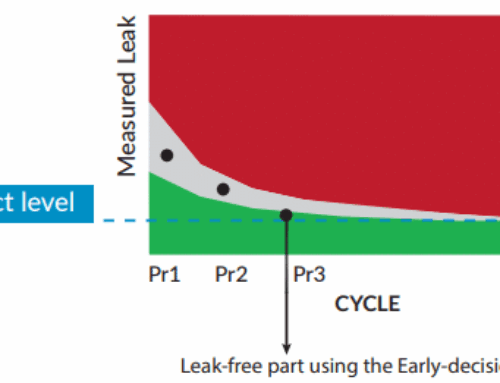
First, a gross-leak check is performed. Then, a fine-decay measurement is conducted using advanced, automated, dry ATEQ instruments such as the F620 or the F28+. These devices provide fast, repeatable results and are designed to handle high-volume production while ensuring compliance with IP67 standards.
3- Benefits of using ATEQ for IP Waterproof Leak Testing
-
Customer Trust: ATEQ is trusted by the world’s leading consumer electronics manufacturers for IP leak testing (smartphones, wearable devices, and more).
-
Risk Reduction: Minimize recalls and repair costs by detecting leaks early.
-
Speed: Automated ATEQ testers accelerate test cycles, improving production throughput.
-
Regulatory Compliance: Ensure products meet IP standards and industry requirements.