

Leak and Flow Testing Methods Explained
FIND THE RIGHT METHOD FOR MY LEAK TESTING NEED
Leak and flow testing ensure product quality, reliability, and safety. Leak testing detects leaks to prevent failures, while flow testing confirms proper air or liquid flow.
At ATEQ Canada, these methods support industries like automotive, aerospace, medical, and packaging by meeting strict performance standards.
PRESSURE DECAY
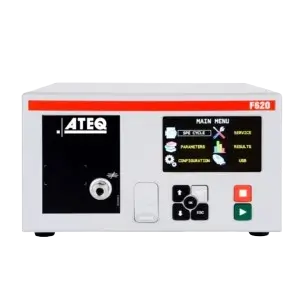
A proven and versatile method that measures pressure loss in a sealed part over time. It’s fast, stable, and easy to automate, making it ideal for industrial production.
The ATEQ F620 delivers high repeatability and fast results for a wide range of applications.
FLOW TESTING (Laminar or Mass Flow)
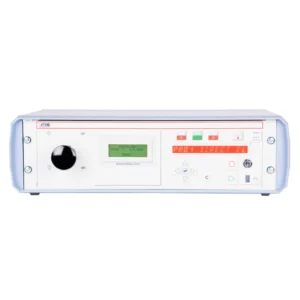
This method measures the airflow through a part or system to detect leaks or verify correct flow performance.
ATEQ’s D620 and related instruments ensure precise measurements where flow accuracy is critical—such as in medical devices or fuel systems.
TRACER GAS
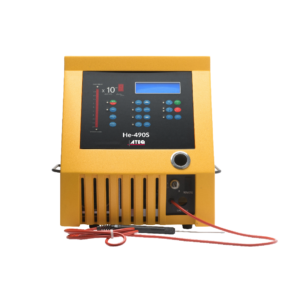
When high sensitivity is needed, tracer gas methods using helium or hydrogen offer unmatched precision.
Instruments like HX490S detect microscopic leaks in industries such as auto, EV, HVAC, medical, or military.
ELECTRICAL TESTING
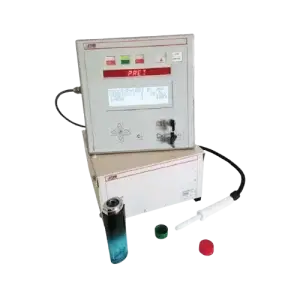
For products requiring insulation integrity or electrical safety—like EV batteries or power electronics—
ATEQ’s IONIQ series verifies grounding, insulation resistance, and dielectric strength with precision and speed.
TO DIVE DEEPER: Read Our 101 Guide on Leak Testing Methods
Selecting the best leak or flow testing technique depends on part characteristics, target sensitivity, production cycle time, and environment. ATEQ Canada’s engineering team works with manufacturers to identify the optimal balance between precision, productivity, and cost.
Learn in detail how to choose the most suitable leak testing method for your product and application.
Contact ATEQ for sales information, general questions, press release information and marketing inquiries.